
Event Parking Revenue: How to Capitalize on Local Events
Turn nearby concerts, games, and conventions into a recurring income stream from your parking lot with the right pricing, signage, and reservations.
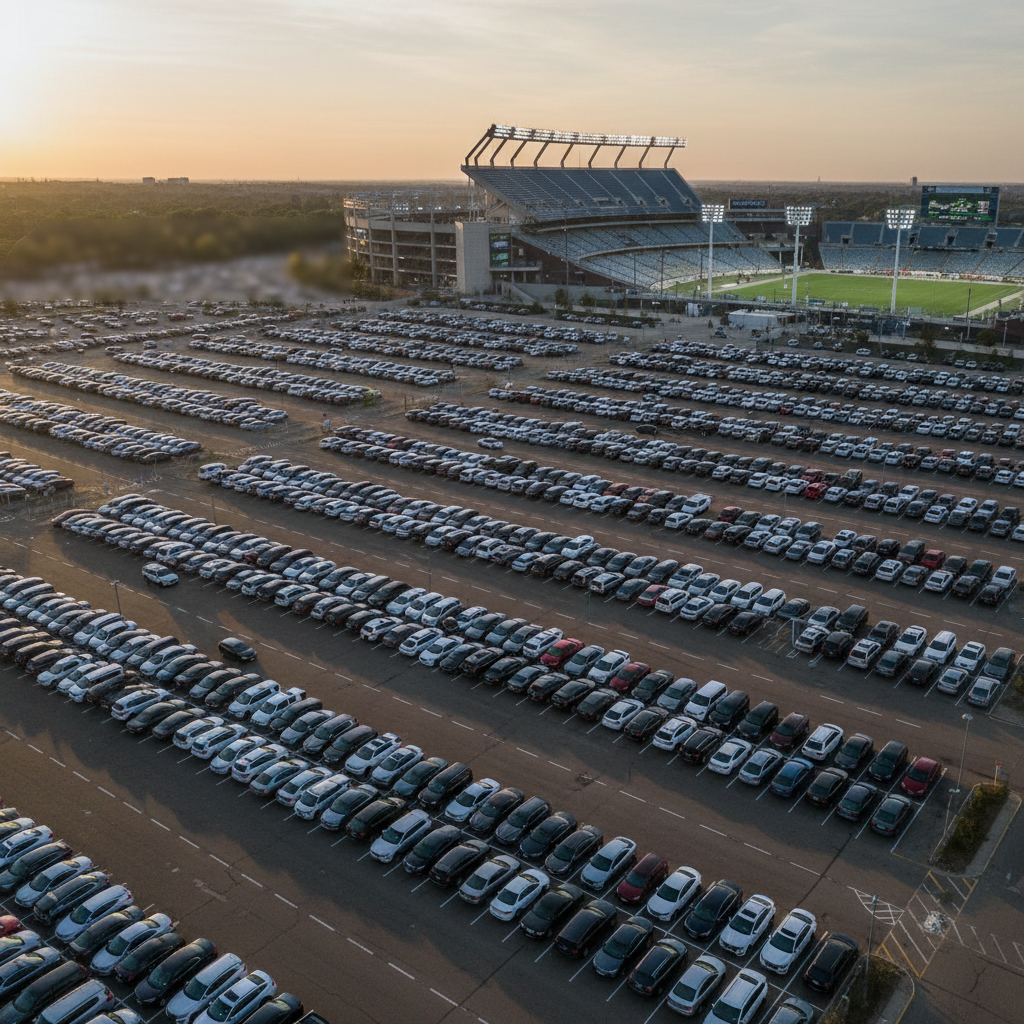
Local events transform underused parking assets into high-margin revenue streams. For property owners and commercial real estate investors who control lots or garages near venues, a single well-priced event can outperform months of daily parking income.
This guide walks through practical, data-driven tactics to increase event parking revenue — from pricing models to operations and contract strategies. If you own property near venues, you’ll find actionable numbers and tools to evaluate the opportunity for your asset.
Understanding event parking demand
Event parking demand is concentrated, elastic and predictable when you map schedules of nearby venues. Concerts, college games and convention center shows create large short-duration demand spikes that can support premium per-spot pricing compared with daily rates.
Start by building a simple demand profile: event frequency, average attendance, and competing supply within a 10–15 minute walk. A 5,000-seat venue with two major events per week generates many thousands of potential car trips — even capturing 2–5% of that audience can convert into significant revenue for a nearby lot or garage.
Event parking pricing: yield for peak demand
Event parking pricing must balance willingness-to-pay against competitive options (street meters, owned venue lots, apps). Use discrete levels: off-season/base price, standard event price, and premium price for high-profile shows. Dynamic adjustments by event type increase capture without deterring regular customers.
Realistic example: set a standard event price at $25/space for a 200-space lot and a premium price of $40 for headline concerts. If you sell 150 spaces at $25 and 50 at $40 for one night, revenue = (150 × $25) + (50 × $40) = $6,250 (estimate).
Maximizing stadium parking revenue
Stadium parking revenue often benefits from multi-channel sales: advance pre-sales, partnerships with teams, and day-of-event gate sales. Pre-sold inventory captures higher prices and reduces on-site congestion. Long-term contracts with teams or vendors provide stability while allowing you to set higher per-spot rates for primetime games.
Example: a 500-space surface lot that negotiates a per-event contract at $35/space for premium games and sells 80% occupancy for ten games per season generates: 500 × 0.8 × $35 × 10 = $140,000 (season estimate). Adding ancillary revenue like reserved VIP spaces and tailgate fees boosts that number.
Strategies to capture concert parking income
Concerts are high-yield opportunities because attendees value convenience and will pay a premium for proximity. Offer tiered options: general event parking, VIP/closer stalls, and early-entry passes. Integrate digital pre-sales with QR code access to streamline throughput and maximize hourly turnover.
Numeric scenario: a 120-space garage priced at $85 for VIP pre-sale and $45 for general admission during a major concert night. If you sell 40 VIP and 60 general spaces: (40 × $85) + (60 × $45) = $8,600 (estimate). Multiply that by multiple events per month and the incremental income supports upgrades and marketing.
Operational playbook: access, staffing, and payments
Operational efficiency directly affects event parking profit margins. Key areas: entrance/egress flow, staffing for peak windows, and contactless payment systems. Minimize friction — faster turnover reduces queue spillover that can lower perceived value and deter purchases.
- Pre-sale and digital gates: lowers staffing cost and enables surge pricing.
- LED signage and marshaled lanes: increase throughput and visibility.
- Multiple payment options: credit, app, and contactless for faster transactions.
Estimate impact: reducing ingress time by 50% can allow more turnings per hour for valet-style setups, increasing event yield without expanding physical capacity.
Pricing technology and near-venue marketing
Use real-time pricing tools and local promotions to capture attendees searching for parking near venues. Listing inventory on event parking marketplaces and integrating with venue maps increases discoverability. Consider short-term promotions during slower event windows to build repeat customers.
For owners evaluating price sensitivity, a simple split-test can quantify elasticity: offer two adjacent events with prices of $30 and $40 and compare sell-through. Use results to update event pricing algorithms and segment customers willing to pay for premium proximity.
Contracts, partnerships, and recurring revenue
Long-term revenue from event parking often comes from contracts with promoters, teams, and venues. Contracts reduce sales volatility and allow capital improvement planning. Negotiate revenue shares tied to attendance or set flat guarantees plus per-event performance bonuses.
Also evaluate hybrid models: keep a portion of inventory for day-of sales and reserve premium spots for contract holders. If your property is underutilized on non-event days, see strategies in the article How To Monetize Unused Parking Spaces to layer weekday income alongside peak-event pricing.
Technology choices: apps, access control, and revenue capture
Deciding whether to integrate with third-party parking apps or build proprietary systems affects your margins and control. Third-party apps expand reach but take a commission; in-house systems keep revenue but require investment and operational bandwidth. For a comparison of revenue outcomes, review Parking Lot vs Parking App: Which Makes More Money?.
Practical approach: use apps to fill excess inventory while preserving a fixed percentage for direct sales to maintain margin control. Implement clear access control (QR or RFID) to reduce fraud and improve customer experience, which supports higher pricing over time.
Measurement: KPIs that matter for event parking
Focus on metrics that correlate directly with profitability: revenue per event, revenue per space per event, sell-through rate, average spend per vehicle, and operational cost per event. Track channel performance (pre-sale vs gate) to optimize marketing spend and pricing for future events.
- Revenue per space per event = total event revenue ÷ total spaces sold.
- Sell-through rate = spaces sold ÷ total inventory available.
- Net income per event = total event revenue − event-specific operating costs (staff, signage, payment fees).
Example KPI calculation: if total revenue is $6,250 for 200 spaces sold, revenue per space = $31.25 (estimate). Subtract event-specific operating costs (e.g., $1,200) to get net event profit for clearer decision-making.
Quick financial scenarios and use of tools
Estimates help you decide whether to implement dynamic pricing or pursue a contract. Consider these quick scenarios for a 200-space lot with three events per week.
- Conservative: average sale $20/space, 50% occupancy per event → 200 × 0.5 × $20 × 12 events/month = $24,000/month (estimate).
- Optimized: average sale $30/space with pricing tiers, 70% occupancy → 200 × 0.7 × $30 × 12 = $50,400/month (estimate).
To refine projections for your asset, run your numbers through the parking revenue calculator or the What Is My Parking Worth calculator to estimate both short-term event income and the impact on long-term asset value.
Final Thoughts
Event parking is a high-leverage strategy for owners of lots and garages near venues. With targeted pricing, streamlined operations, and the right mix of direct sales and marketplace distribution, event nights can produce outsized returns relative to daily parking.
Evaluate your asset with empirical scenarios and incremental tests before committing to capital improvements or long-term contracts. Small changes in pricing, inventory allocation and sales channels often produce disproportionate improvements in stadium parking revenue and concert parking income.
Ready to quantify the opportunity for your property? Try the /