
Hospital Parking Revenue Strategies for Medical Facilities
How hospitals and medical campuses balance patient access with parking revenue using tiered rates, staff permits, and validation programs.
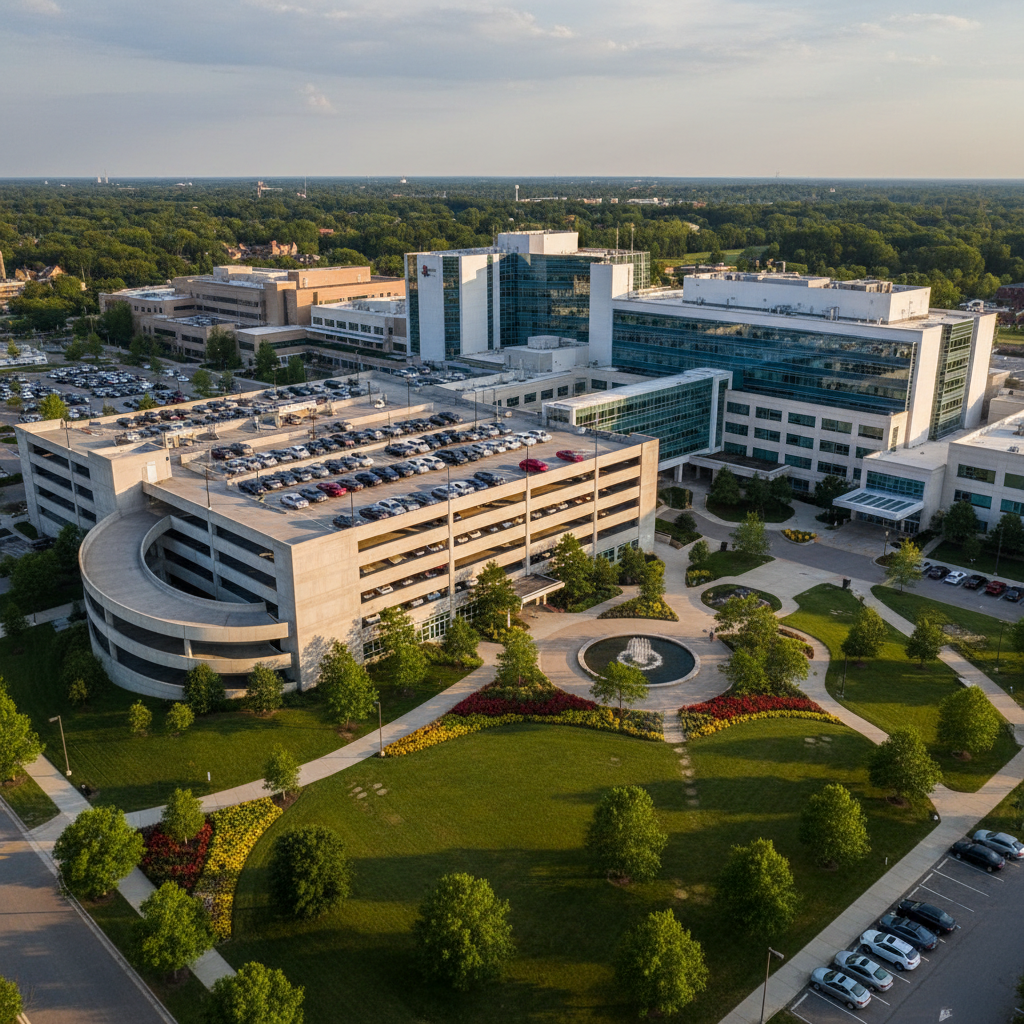
Hospital parking revenue is no longer an afterthought for medical facilities — it is a predictable income stream and an operational lever that affects patient access, staff satisfaction, and community relations. Facility owners and commercial investors who treat parking as real estate can convert underused asphalt into a stable cash flow while improving the patient experience.
This guide lays out pragmatic, data-driven strategies for medical campuses, from optimizing patient parking fees to structuring staff parking permits and deploying technology for enforcement and revenue capture. Where appropriate, we include realistic, labeled estimates so you can model scenarios for your asset.
Hospital Parking Revenue: The business case
Hospital parking revenue contributes to overall facility economics in three ways: direct fee income, avoided operational costs (through efficient utilization), and enhanced ancillary services (valet, EV charging). For a large urban medical center, parking can represent a low-volatility, high-margin revenue line because demand is relatively inelastic compared with retail parking.
Investors and operators should quantify revenue potential before implementing changes. Use a reliable model to estimate utilization, average transaction value, and seasonality. If you want a quick baseline, the What Is My Parking Worth calculator can help you translate occupancy and rate assumptions into monthly and annual revenue figures.
Medical Campus Parking: Design, zoning, and space allocation
Effective medical campus parking strategy begins with spatial planning. Separate patient, visitor, outpatient, and staff flows to reduce congestion and improve turnover. Allocating spaces by function affects both revenue and access: short-term curb and front-of-house spaces should prioritize high-turnover patient visits while long-term and staff parking can be assigned to peripheral lots or structured parking.
Zoning and local regulations often dictate minimum and maximum parking ratios for healthcare uses. Where possible, negotiate with municipalities for shared-use agreements or reductions based on demonstrated patient transport programs. The layout decision also feeds revenue models: converting 30 surface spaces to paid short-term spots might raise fee income without increasing supply.
Patient Parking Fees: Pricing strategies and fairness
Setting patient parking fees requires balancing revenue goals with access and community perception. Tiered pricing is effective: offer free or reduced first 30–60 minutes for ambulatory patients, moderate hourly rates for longer outpatient visits, and capped daily rates for procedures that require extended stays. Example estimate: a $6/hour short-term patient fee with average duration of 1.5 hours across 250 daily transactions yields approximately $2,250/day (estimate).
Consider concessions for vulnerable populations — reduced rates for long-term treatments, oncology, or frequent therapy patients. Implementing validated discount programs using parking cards or digital passes preserves goodwill while protecting revenue. For scenario modeling, a conservative approach is to test a pilot pricing change on one lot and measure elasticity before systemwide rollout.
Staff Parking Permits: Programs that protect revenue and morale
Staff parking permits are a common lever for stabilizing cash flow and controlling parking demand. Permit programs can be monthly, quarterly, or annual and segmented by employee role and seniority. Example estimate: charging $85/month × 120 staff spaces = $10,200/month (estimate). That predictable revenue underwrites enforcement and infrastructure costs.
Design the permit program to reduce free-for-all curb use and promote alternative commuting options. Offer tiered permits (covered vs. surface vs. remote lot with shuttle) and volume discounts for departmental bulk purchases. Combine permit pricing with demand-management incentives such as carpool preferred spaces and transit subsidy integration.
Healthcare Parking: Technology and enforcement that increase capture
Technology investments can dramatically improve capture rates and customer experience on medical campuses. Modern systems include pay-on-foot kiosks, mobile payments, ANPR (automatic number plate recognition), and permit management portals. These solutions reduce leakage, speed transactions at peak times, and allow dynamic pricing by zone or time of day.
Enforcement is an essential complement. Clearly posted policies, digital permit validation, and consistent ticketing or booting reduce unauthorized use. Integrate enforcement data with revenue analytics to identify problem areas and adjust allocation. If implementation costs are $120,000 for a garage ANPR system, calculate payback by estimating additional monthly revenue from reduced nonpayment and higher compliance.
Maximizing Revenue with mixed-use strategies and ancillary services
Medical campuses can augment parking income through ancillary services: valet for surgical centers, reserved charging for EV patients and staff, and partnerships for off-hour commercial use. Valet can command premium pricing for short-duration, high-touch patient flows; yet its cost structure must be modeled against labor and liability.
Mixed-use strategies include leased parking to nearby commercial tenants during off-peak hours, or pay-by-event pricing for conferences and community health fairs. Before opening lots to third-party use, analyze demand curves for weekday clinical hours versus evening/weekend events. For a medium facility, renting 100 spaces at $15/event for 10 events/month would add $15,000/month (estimate) — net of staffing and management fees.
Maintenance, capital planning, and revenue forecasting
Long-term revenue depends on maintenance and capital reinvestment. A poorly maintained lot reduces utilization and increases liability. Allocate a capital reserve — commonly 3–5% of gross parking revenue annually — for resurfacing, lighting upgrades, and signage. For example, on $1.2M annual parking revenue, a 4% reserve equals $48,000/year (estimate).
Forecasting must include sensitivity scenarios for demand shifts, regulatory changes, and new mobility trends like telehealth, which reduces some visit volumes. Use a conservative base case, a downside case (-10–20% demand), and an upside case (+10–15%) to stress-test pricing, permit uptake, and capital projects. If you prefer an automated model, try a detailed parking revenue calculator that accounts for utilization curves and rate structures to produce month-by-month projections.
Case studies and quick numerical examples
Practical examples help illustrate scale. Example 1 (urban hospital): 700 structured spaces, 75% average occupancy, blended average revenue per space of $120/month => 700 × 0.75 × $120 = $63,000/month (estimate). Example 2 (suburban outpatient campus): 300 surface spaces, patient average spend $4.50/session, 400 daily transactions => 400 × $4.50 = $1,800/day ≈ $54,000/month (estimate based on 30 days).
Comparing conversion strategies: converting 40 administrative surface spaces to paid staff permits at $85/month could yield $3,400/month (estimate), while reallocating those spaces to patient short-term at $6/hour with higher turnover could outperform depending on demand patterns. Reference studies and models like How Much Revenue Can a Parking Garage Generate? when valuing structured assets, and consult the Commercial Parking Lot Revenue Guide for surface lot benchmarks.
Final Thoughts
Hospital parking revenue strategies must be practical, patient-forward, and financially disciplined. Treat parking as part of the medical campus’s operating portfolio: measure utilization, pilot pricing changes, invest in technology that reduces leakage, and design staff permit programs that balance revenue with employee needs.
Combine quantitative modeling with a phased implementation plan — small pilots, measurement, and scale-up — to minimize disruption and maximize retention of patient goodwill. Use scenario modeling to set realistic expectations for payback on capital investments and to justify reserve allocations for ongoing maintenance.
Ready to quantify potential parking income for your facility? Start with the What Is My Parking Worth calculator and refine your assumptions with the parking revenue calculator to build a projection you can present to stakeholders.