
How to Sell a Parking Lot: A Complete Owner's Guide
What buyers look for, how parking lots are valued at sale, broker vs. direct sale, and the documents you need to maximize the price of your parking lot.
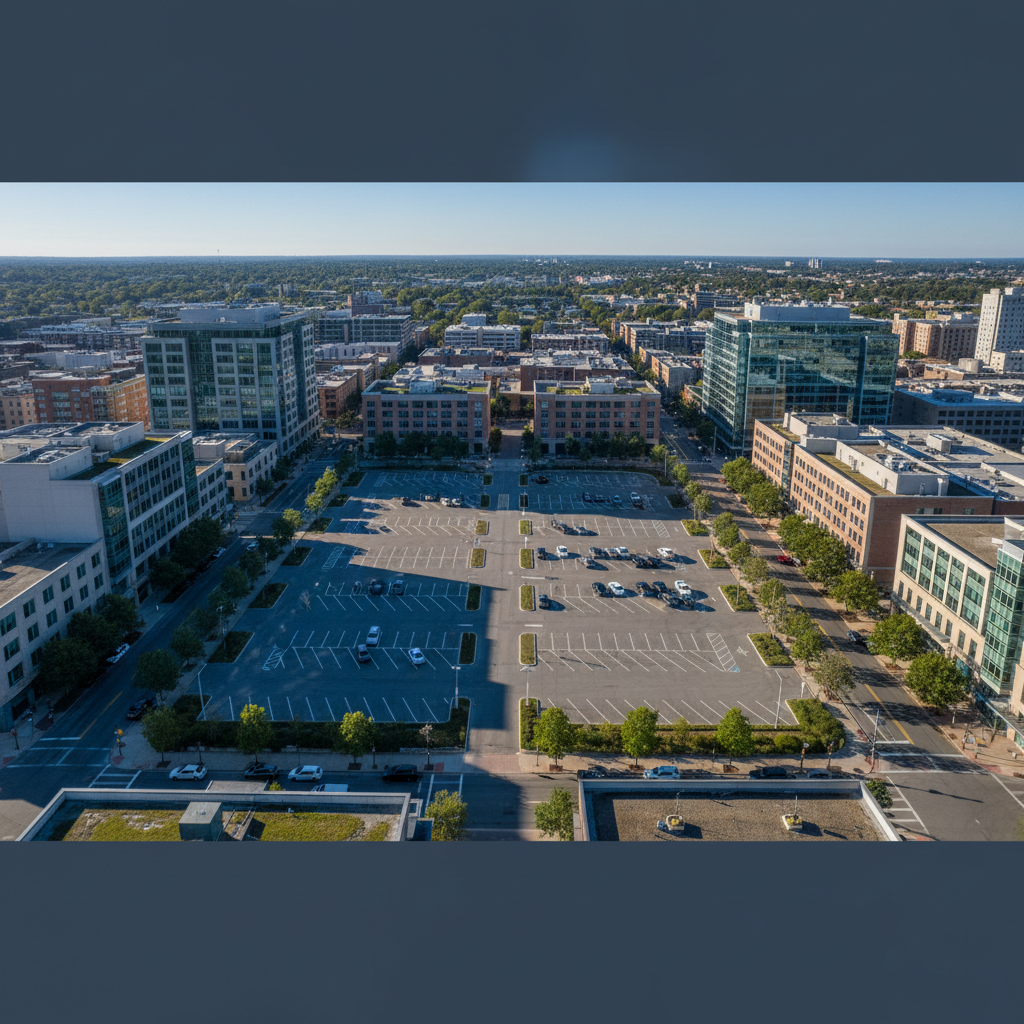
Selling a parking lot requires more than a “For Sale” sign and a broker call. Buyers today expect audited financials, clear zoning, and a defensible valuation tied to revenue, expenses and market cap rates. Owners who prepare the asset, set realistic price expectations, and target the right buyer pool close faster and with fewer concessions.
This guide walks you step-by-step through how to sell a parking lot: how to estimate the market value, which buyers to market to, what documentation to assemble, and how to negotiate to a profitable closing. Practical examples and ballpark calculations are included so you can benchmark your property immediately.
Start with a Clear Exit Strategy: Why and When to sell parking lot
Before you start the sales process, define your objective: maximize sale proceeds, free up capital, or transfer operating headache. That decision affects timing, pricing, and buyer outreach. If you need a quick sale, expect to price below market value or accept non-operational buyers. If you have time, you can optimize revenue streams and achieve a higher sale multiple.
Market timing matters. Urban centers with constrained parking supply and rising demand typically produce lower capitalization rates and higher parking lot sale price expectations. Conversely, suburban lots with declining occupancy or large near-term capital needs will trade at a discount. Quantify your target outcome up front so every choice—capital improvements, broker selection, and disclosure—aligns to that goal.
How to perform a robust parking lot valuation
Parking lot valuation is primarily income-based for operating assets. Start with a stabilized revenue projection, subtract operating expenses to calculate net operating income (NOI), and apply an appropriate capitalization rate. For a quick revenue check use a parking revenue calculator tailored to hourly, daily, and monthly mix to ensure your top-line assumptions reflect local demand.
Example (estimates): If average monthly contract parking is $85/month × 120 spaces = $10,200/month (estimate) and transient sales add another $8,000/month (estimate), total gross revenue is $18,200/month = $218,400/year (estimate). If operating expenses (management, maintenance, insurance, property tax reserve) are 30% of gross, NOI = $152,880/year (estimate). At a 6.5% cap rate that implies a valuation of approximately $2,353,538 (estimate): $152,880 ÷ 0.065 = $2,353,538.
Cap rates vary by market, asset quality, and lease structure. If buyers require a higher return in your market—say an 8.0% cap—the same NOI would imply $1,911,000 (estimate). For a quick, preliminary check of your asset’s market value, try the What Is My Parking Worth calculator to see how revenue, expenses, and cap rate assumptions change the result. For revenue modeling by product mix, also use a dedicated parking revenue calculator.
Prepare the asset and documentation to maximize offers
Buyers and brokers expect a standardized packet. Preparing this early reduces friction and shortens due diligence. Key documents include:
- Tax returns and P&L statements for the last 3–5 years
- Occupancy and revenue reports by product type (monthly, transient, event)
- Copies of service contracts, management agreements, and permits
- Survey, legal description, easements, and title report
- Environmental assessments (Phase I; Phase II if indicated)
- Capital expenditure history and deferred maintenance log
Proactively addressing known issues—pavement conditions, drainage, lighting, or ADA—improves buyer confidence and can justify a higher asking price. Small improvements that increase rent or occupancy often deliver much larger increases in perceived value than their cost.
Finding parking lot buyers and choosing a parking lot broker
Target buyers depending on asset profile. Typical parking lot buyers include private equity operators, local entrepreneurs consolidating assets, public parking operators, and value-add investors seeking to convert surface lots into mixed-use or structured parking. Institutional capital is active for high-profile structured parking with long-term leases.
Engage a parking lot broker with specific parking market experience. Brokers familiar with parking lot buyers will: build a targeted buyer list, benchmark recent parking lot sale price comps, and qualify buyers for cash or financing capability. Broker fees typically range from 3%–6% of sale price; consider structuring incentives for above-threshold offers.
Setting the right asking price and negotiating the parking lot sale price
Your asking price should be defensible with data: NOI, comparable sales, and cap rate justification. Presenting multiple valuation approaches (income, sales comparison, replacement cost) helps buyers validate your price. Use realistic revenue runs and clearly call out one-time items or lease irregularities that distort NOI.
Negotiation tactics that preserve price:
- Offer staged disclosures tied to buyer qualification—limit sensitive documents until proof of funds or executed NDA/LOI
- Use earnest money and hard close dates to reduce time exposure
- Consider seller financing or earnouts only if they measurably increase net proceeds
Due diligence checklist and closing timeline
Once you accept an LOI, buyers will run due diligence. Anticipate a 30–90 day window depending on complexity. Common due diligence items include title and survey review, environmental assessments, revenue audit, lease/contract verification, and government approvals if zoning or use changes are expected.
Typical due diligence timeline:
- Week 1–2: Title commitment, initial revenue and expense audit
- Week 2–4: Phase I environmental and structural/site inspections
- Week 4–6: Lease/contract assignments and third-party consents
- Week 6–12: Final adjustments, funding, and closing
Tax, structuring, and risk considerations for sellers
Tax outcomes vary with entity structure (LLC, partnership, C-corp) and how proceeds are allocated between land and improvements. Consult a tax advisor early to evaluate 1031 exchange eligibility, capital gains exposure, and state-specific transfer taxes. In many cases, a properly executed exchange can defer federal capital gains taxes and preserve capital for re-investment.
Address risk transfer cleanly in agreements. Buyers will insist on environmental indemnities and clear representations about revenue accuracy. Where possible, limit long-term contingent liabilities and disclose all material facts. A transparent sell-side approach reduces post-closing disputes and speeds escrow.
Final Thoughts
Selling a parking lot is a process of translating predictable cash flows and site characteristics into a market-understood valuation. The owners who win in this market prepare detailed financials, address operational issues proactively, and partner with brokers who know where to find qualified parking lot buyers. Use evidence—revenue audits, recent parking lot sale price comps, and conservative cap rate selection—to defend your asking price.
Start by running a quick valuation to set expectations and guide decisions about repairs, broker selection, and timing. For more detail on value drivers that impact buyer underwriting, see What Affects Parking Lot Value? A Property Owner's Guide, and to benchmark how ZIP-code-level demand changes value, review Parking Lot Value by ZIP Code.
If you’re ready to quantify your asset’s potential sale proceeds, try the What Is My Parking Worth calculator now to generate a valuation range and then refine revenue assumptions with a specialized parking revenue calculator.