
Restaurant Parking Lot Monetization After Hours
How restaurants and bars can generate side income by renting their parking lots overnight, during the day, or to nearby commuters and businesses.
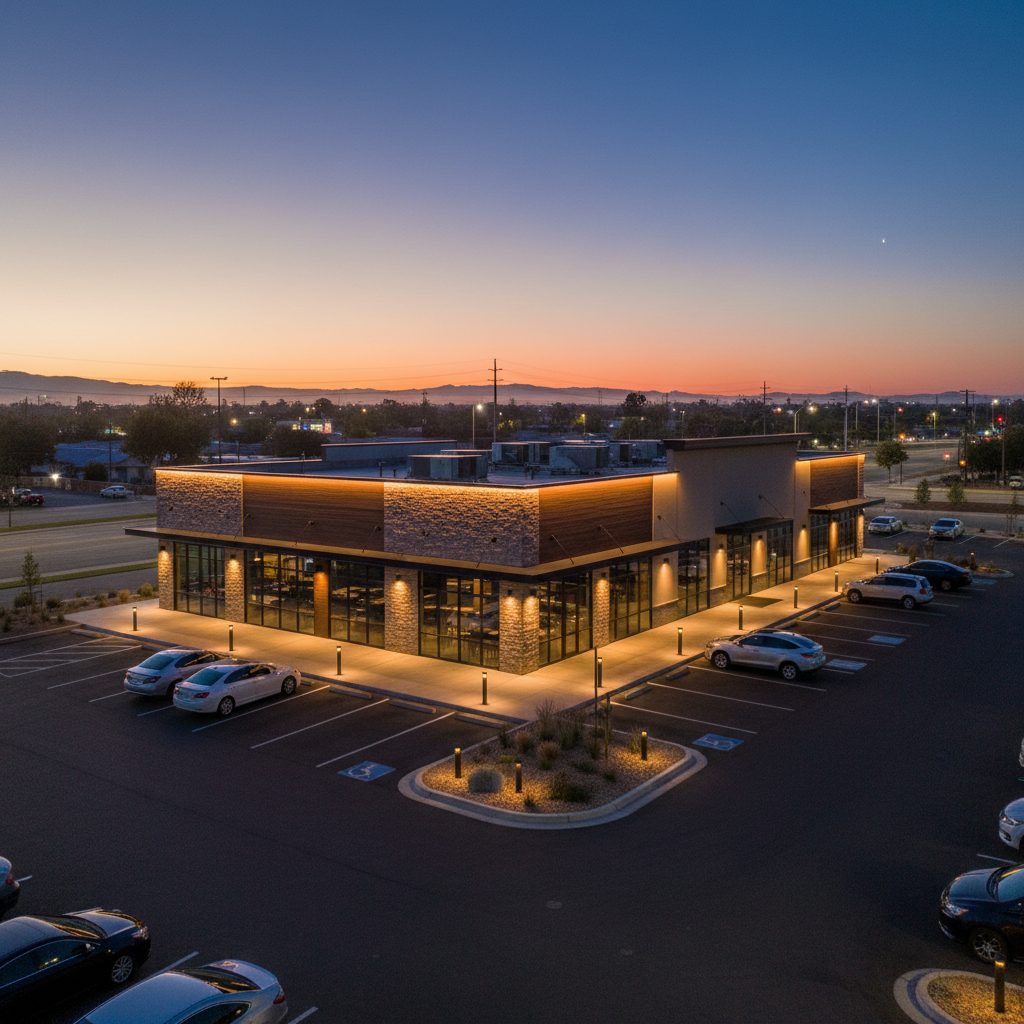
A restaurant parking lot is wasted capital after kitchen close. For property owners and commercial real estate investors, converting underutilized restaurant parking into steady cash flow is a low-friction value-add strategy that improves net operating income without adding building square footage.
This guide explains practical approaches to capture restaurant parking revenue during off-hours, with realistic estimates and step-by-step modeling you can apply to your site. If you want an immediate projection for a specific property, try the What Is My Parking Worth calculator linked below to get an on-target baseline.
Why restaurant parking revenue matters for investors and owners
Parking is often treated as lost or complimentary space tied to the restaurant’s guest experience, but it represents an asset class with recurring revenue potential. Even modest utilization of after-hours parking can improve a site’s cap rate equivalently to small increases in rent.
For a quick frame of reference: converting 30% of a 100-space lot to paid after-hours use at a conservative $3/night yields roughly $270/week — an incremental $1,080/month (estimate). Scale that to larger lots and the contribution to NOI becomes material.
Understanding demand profiles: commuter parking and event peaks
Before pricing, map the local demand profile. Two dominant after-hours use cases are commuter parking (weekday evening storage) and event/nightlife overflow (weekend peaks). Commuter parking is predictable; event demand is sporadic but often higher yield per space.
Example commuter math (estimate): an employer or transit-oriented demand may support $85/month for a guaranteed space. At $85/month × 120 spaces = $10,200/month (estimate) before fees and vacancy. That’s a straightforward comparison point for a restaurant lot within a short walk or shuttle radius of transit hubs.
Restaurant lot rental structures you can offer
There are multiple rental models to monetize a restaurant lot after hours. The optimal structure balances simplicity for users with predictable cashflow for owners:
- Monthly permits — best for commuter parking with minimal turnover.
- Daily or hourly passes — captures event and nightlife users who pay premium rates.
- Event-only leasing — fixed-price agreements for concert or stadium nights.
- Shared use agreements — formal contracts with neighboring businesses or institutions.
For example, a hybrid model might allocate 60 spaces to monthly permits at $70/month and reserve 20 spaces for premium event pricing at $8/night. Revenue estimate: (60 × $70) + (20 × $8 × 8 event nights/month) = $4,200 + $1,280 = $5,480/month (estimate).
If you’re exploring structural alternatives beyond restaurants, our article How To Monetize Unused Parking Spaces provides case studies that translate directly to restaurant sites.
Shared parking income and legal frameworks
Shared parking income depends on clear agreements and often municipal approval. Shared parking agreements allow the restaurant lot to serve different users at different times — patrons during business hours, commuters or residents after hours. This maximizes asset utilization while minimizing conflict.
Key contract elements include hours of permitted use, liability and insurance clauses, parking boundary maps, and termination conditions. Expect to negotiate a blended rate when the counterparty wants exclusive rights for certain night types or seasons.
Institutional counterparts such as churches or community centers frequently run similar programs; see Church Parking Monetization for governance and insurance templates that apply to restaurant-adjacent deals.
Operational and enforcement considerations
Collecting revenue is straightforward with modern technology, but enforcement and risk management require planning. Options to operationalize after-hours parking include automated payment kiosks, license-plate recognition (LPR) gates, and third-party transaction platforms.
Enforcement strategy should include clear signage, published rules, and a graduated approach: warnings, fines (contractual, not municipal), and tow enforcement through a licensed operator. Insurance and indemnity terms must be explicit; add at least $1M additional liability coverage when hosting third-party parking tenants (estimate depending on local requirements).
Operational cost example (estimate): software fees of $300–$600/month, signage and light upkeep amortized at $100/month, and routine enforcement/tow contract at $400/month could reduce gross revenue by roughly $800–$1,100/month, depending on scale.
Pricing strategies to maximize yield without alienating the restaurant operator
Price sensitivity varies by user segment. Commuters value predictability and proximity; event users accept higher per-use fees. Use a tiered pricing approach:
- Reserved monthly permits at a discount to local market garages.
- Unreserved daily passes at a premium for convenience and proximity.
- Dynamic pricing for peak nights (sports, concerts, festivals).
Example blended pricing (estimate): Reserve 40 spaces at $60/month = $2,400; 30 daily spots at $5/night with average 10-night occupancy = 30 × $5 × 10 = $1,500; occasional event rental income = $2,000/month. Blended monthly gross = $5,900 (estimate).
Perform a sensitivity test: a 10% increase in utilization or price can have outsized impact on net operating income relative to incremental cost — run scenarios with a parking revenue calculator to quantify outcomes and stress-test lease terms.
Implementation steps and revenue modeling
Implementation is a sequence of site assessment, legal framework, pricing, and operations. Start with a demand audit: local transit nodes, employer clusters, event calendars, and competitor supply. Then draft a simple shared-use agreement and a basic pricing pilot for 30–90 days.
Model revenue using clear assumptions for occupancy, price, and operating costs. For a small 80-space lot focused on commuters: assume 45 monthly permits at $75 = $3,375; 15 daily spaces at $4/night with 12 nights/month occupancy = $720; gross = $4,095/month (estimate). Subtract typical operating costs (payment platform, lighting, enforcement) to estimate net contribution.
To accelerate a decision, run your numbers through the What Is My Parking Worth calculator and our dedicated parking revenue calculator to compare scenarios. The calculators standardize assumptions and translate utilization into cashflow and cap-rate impact.
Technology and platforms that simplify after-hours management
Platform selection influences collection efficiency and user experience. Look for features that minimize on-site labor: mobile payments, reservations, LPR reconciliation, invoicing for monthly permits, and integrations with accounting systems.
Third-party marketplaces can provide demand aggregation but typically charge commissions. A direct subscription model reduces fees but requires marketing and customer service. Hybrid approaches — a marketplace to seed occupancy, then converting best customers to direct monthly permits — often balance acquisition costs and long-term margin.
Before committing, pilot the chosen technology on a portion of the lot to measure redemption, user complaints, and enforcement incidence. Track KPIs: fill rate, average revenue per space, churn on monthly permits, and incident rate tied to enforcement.
Final Thoughts
Restaurant lots are an underleveraged asset for after-hours parking revenue. With clear contracts, conservative pricing, and basic operational controls, owners can convert intermittent excess capacity into repeatable income that improves property returns without expensive capital projects.
Start small, document real usage and costs, and iterate pricing. Use scenario modeling to understand downside occupancy and upside demand during seasonally busy periods. If you want comparative case studies and workflow templates, the How To Monetize Unused Parking Spaces article provides practical examples you can adapt to restaurant sites.
Ready to quantify your lot? Run a site-specific projection with our / to see the potential uplift to NOI and test commuter parking, event pricing, and shared parking income scenarios in minutes.