
Retail Strip Mall Parking Revenue Strategies
How strip mall and shopping center owners can unlock parking revenue without hurting tenant traffic, including overflow rentals and EV charging.
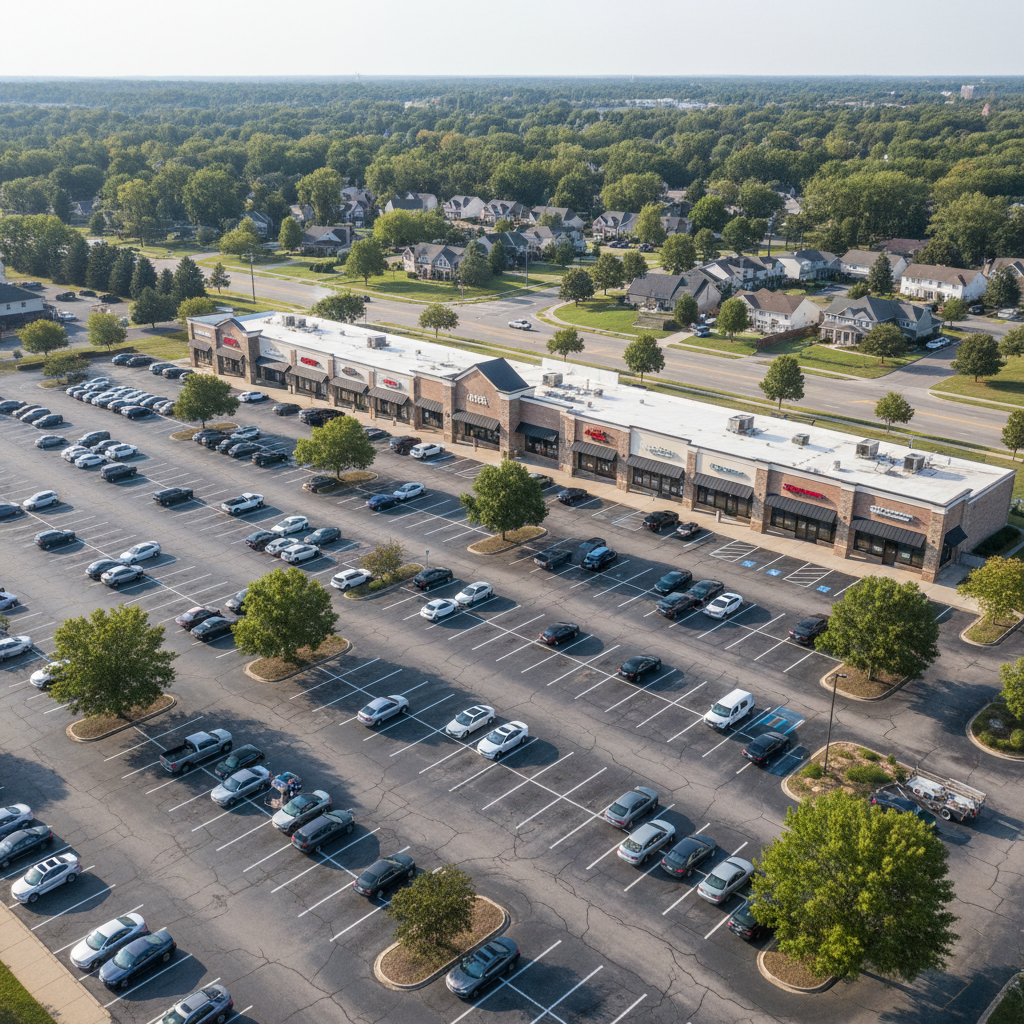
Owners and managers of strip malls and neighborhood shopping centers often undervalue the asset sitting in plain sight: the parking lot. With rising demand for convenience, last-mile delivery staging, and EV charging, a strategic approach to strip mall parking turns unused asphalt into recurring income without sacrificing tenant relationships.
This guide lays out practical, replicable strategies to increase shopping center parking revenue, convert overflow parking into reliable cashflow, and balance tenant parking needs with monetization. The recommendations are data-driven, include realistic example math, and are designed for owners, investors, and property managers who need measurable results.
Assessing Your Strip Mall Parking Asset
Before implementing pricing or technology, quantify your current baseline: total spaces, tenant-allocated stalls, peak utilization hours, and turnover rates. A 150-space strip mall with 80% peak utilization has fundamentally different opportunities than a 60-space center that sits 40% empty most weekdays.
Use simple occupancy studies—count utilization in 30-minute intervals over a representative week—to identify true surplus. Compare tenant parking demand against leasing documents: many leases guarantee a number of tenant parking spaces but leave a portion of the lot unassigned and rentable during off-peak hours.
For a deeper overview of measurement methodology and sample data collection templates, see the Commercial Parking Lot Revenue Guide which covers survey cadence and conversion metrics relevant to shopping center parking revenue.
Baseline Metrics: Retail Parking Lot Income Drivers
Retail parking lot income depends on three primary metrics: occupied spaces, average revenue per space, and turnover. Multiply these to project monthly revenue. Example (estimate): $85/month × 120 spaces = $10,200/month if you convert 120 surplus spaces to permit parking at that rate. That figure should be treated as an estimate and validated with a pilot program.
Hourly models change the calculation to consider turnover. If a center captures a $2 average hourly rate with 400 billable hours per space per month, a 50-space program produces $2 × 400 hours × 50 spaces = $40,000/month (estimate). Use a parking revenue calculator to model scenarios before capital investment.
Track yield per occupied space and seasonal variance. Shopping center parking revenue often peaks during holiday retail seasons but can also spike for weekend entertainment tenants; modeling these patterns prevents over- or under-pricing.
Tenant Parking: Balancing Leases and Monetization
Tenant parking is the critical constraint for any strip mall parking strategy. Most lease agreements include tenant parking ratios (e.g., 4 spaces per 1,000 SF) that you cannot legally erode without renegotiation or compensation. Start by mapping assigned stalls and communicating proposed changes early with tenants.
Where surplus exists, consider a tiered approach:
- Reserved tenant stalls nearest retail frontage.
- Permit or subscription parking for adjacent office or service tenants.
- Public paid parking in remaining stalls with time limits to preserve turnover.
If you need implementation ideas for unassigned areas, consult How To Monetize Unused Parking Spaces for tactical case studies on permit programs and non-tenant agreements.
Managing Overflow Parking and Event Demand
Overflow parking is both a risk and an opportunity. Shopping centers adjacent to stadiums, concert venues, or university campuses can monetize overflow on event days without permanent changes. Short-term contracts or per-event pricing capture high-margin revenue while avoiding year-round tenant disruption.
Example (estimate): renting 75 overflow spaces at $10/day for 20 event days yields $10 × 75 spaces × 20 days = $15,000 for the season. Alternatively, a valet or shuttle arrangement for large events can command premium pricing with minimal signage or infrastructure.
Operational controls for overflow:
- Temporary signage and directional cones for event routing.
- Pre-sold passes via an online portal or app tied to a parking permit system.
- Staffing plans and liability waivers for valet services.
Operational Controls That Increase Yield
Enhancing enforcement, technology, and customer experience directly increases yield per space. License plate recognition (LPR), mobile pay stations, and cloud-based access controls reduce leakage and make short-stay parking viable for retail patrons.
Enforcement is a multiplier: weak enforcement undercuts paid programs and reduces tenant trust. Implement clear signage, routine patrols, or contracted enforcement officers. Combine enforcement with a grace period for retail patrons to ensure that paid parking does not drive customers away.
Investments to consider (with payback analysis):
- LPR cameras to track permit violations and hourly stays.
- Contactless pay solutions to reduce friction at pickup.
- Wayfinding and lighting upgrades that increase occupancy and safety, supporting higher per-space pricing.
Pricing Models: Subscription, Hourly, and Dynamic
There is no single right pricing model for strip mall parking. Subscription (monthly permits) stabilizes revenue and is attractive to nearby employees; hourly pricing captures retail turnover; dynamic pricing maximizes yield during peaks. Choose a hybrid that matches your center’s demand profile.
Compare models with realistic examples (estimates):
- Subscription: 100 permits at $70/month = $7,000/month.
- Hourly: average $1.50/hour, 300 billable hours per space per month, 40 spaces = $1.50 × 300 × 40 = $18,000/month.
- Dynamic: peak rates of $5/hour for weekend afternoons with off-peak $1/hour can increase effective hourly yield by 20–40% compared with static rates.
Integrations and Partnerships to Unlock New Revenue
Partnerships broaden the revenue base while minimizing capital outlay. Consider third-party operators for EV charging, car wash services, rideshare staging areas, and last-mile delivery hubs. Each integration should be evaluated for incremental revenue, tenant impact, and operational complexity.
Examples of monetization channels:
- EV charging: revenue per kWh plus a stall fee, often shared with the operator.
- Rideshare staging: set aside short-term queuing areas and charge fleets for priority access.
- Delivery staging: designate short-term loading zones for couriers during peak retail hours for a per-minute fee.
Final Thoughts
Strip mall parking is a flexible asset class that supports multiple revenue strategies without necessarily jeopardizing tenant relationships. The most profitable programs start with rigorous measurement, clear lease diagnostics, and pilot tests that validate pricing and enforcement before full rollout.
Prioritize transparency with tenants, use technology to minimize leakage, and choose pricing and partnership models that reflect localized demand — weekday office traffic differs materially from weekend retail peaks. With a disciplined approach, what looks like a maintenance line item on your P&L can become a consistent revenue center.
Run personalized projections for your property and test scenarios risk-free: /